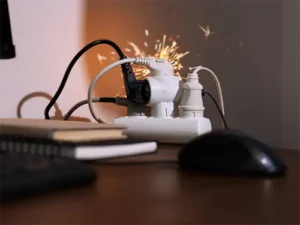
Can Faulty Circuits Cause Electrical Fires?
Electrical fires can be quite dangerous, and it’s important to have a class C fire extinguisher nearby at all times in case one’s sparked in your home. Several types of circumstances can cause electrical fires, including faulty circuits.
What Makes a Circuit “Faulty”?
If something’s “faulty,” such as a circuit, that means that it has a defect or imperfection and isn’t functioning as it should be. But what are some causes of a faulty circuit?
Worn or damaged wiring
Worn or damaged wiring, which could be the result of your living in an older home, is often unable to support modern day power consumption needs. Regardless of the cause, your wiring being physically compromised can make a circuit faulty.
Loose connections
Loose or insecure connections, such as at your outlet, also have the potential to cause electrical fires. Plugs easily falling out of outlets is a sign of this.
Overloaded circuits
If you have overloaded circuits, your circuit breaker will trip, causing whatever’s connected to that specific circuit to lose power. Now, if your circuit breaker’s working as intended, this act will ensure that electrical fires do not occur. However, if the breaker doesn’t deal well with your overloaded circuits, those circumstances can cause an electrical fire.
Moisture or corrosion
Moisture, which can consist of water itself or simply high humidity in the air, can conduct electricity on its own, resulting in sparks and, potentially, an electrical fire. Those conditions can also cause corrosion, which could then result in heating and sparking.
How Faulty Circuits Start Fires
How can a faulty circuit start an electrical fire in your home?
Overheating of Wires
Overheating of wires is one way that a faulty circuit can cause an electrical fire. This can melt insulation, and it can set fire to it and whatever the wires touch or are near.
Arcing and Sparking
Arcing, a continuous electric discharge through the air between a pair of conductors, and sparking, a quick jumping of a current across a gap, can both start fires. Since arcing is continuous, the risk of fire starting from it is much higher, but a spark absolutely has that potential as well.
Short Circuits
When electricity takes a different path, one that offers lower resistance than the intended one, overheating of that alternate path can occur. This usually involves wires, but it can be a variety of things. Regardless, your fire danger’s magnified if that wire or other path of least resistance is surrounded by combustible materials.
Ignored Warning Signs
Above are some of the more common and highly visible indications of a faulty circuit, but there are several others that many overlook:
- intermittent power outages
- flickering lights
- devices repeatedly turning on and off
- crackling, popping or buzzing sounds
- visible sparks when plugging something in
- warm power outlets
- burning smell that’s unaccounted for
- frequently tripped breakers
Preventing Electrical Fires in Your Home
Fortunately, there are several preventative acts that you can take to greatly reduce the chances of an electrical fire taking place in your home.
Spread Out Your Appliances
If you spread out your appliances, you’ll lessen the risk of circuit overload and heat buildup. That’s because plugging numerous appliances into the same outlet or near each other may cause overheating, which will usually result in a faster pace of degradation in the relevant wires and otherwise.
Schedule Regular Electrical Inspections
Scheduling regular electrical inspections can result in professionals seeing damage in situations that aren’t obvious to you. For example, they can analyze circuits and determine if they’re overloaded, find faulty wiring before sparks and arcing takes place, detect outdated components and look behind walls and other hard-to-reach places.
Upgrade When Needed
If you do have points of concern, upgrades can drastically decrease the chances of an electrical fire starting in your home. This process could involve the replacing of worn-out wiring, upgrading of your electrical panel and adding of power outlets.
Pay Attention to Your Breaker Panel
Regardless of everything else, make sure to keep a close eye on your breaker panel as this is normally your first line of defense against electrical fires. That’s because when it’s working as intended, your chances of electrical fires go down significantly, but if it’s suffering, those odds increase quite a bit.
Call a Professional Immediately
There are a few indicators that should result in your calling a professional immediately.
These include:
- sparks or arcing
- smoke
- unexplained burning smell
- crackling sounds from outlets and switches
Also note that if your breaker’s started tripping quite often, that’s also a sign of urgent attention being needed as the situation’s started heading towards or is already dangerous.
Why Choose Tampa Mister Sparky for Circuit Repairs
It’s important that you don’t put up with any malarky from your electrical system. Call Mister Sparky instead so that you won’t be experiencing those sparks, arcing and other dangerous conditions in your home.
Why should you choose us for circuit breaker repairs or maybe even a circuit breaker replacement? We’re well-known throughout the Tampa, FL, area for our five-star services, which are provided by certified, experienced and knowledgeable technicians, electrical safety’s important to us, and we’re dedicated to helping create a safe home environment for you.
Final Thoughts
Electrical fires have the potential to be quite dangerous to both property and life, and it’s essential to reduce those risks as much as you can. Fortunately, taking preventative action, on your own when possible and with professionals doing the work when it’s not, will do that. Regardless of your specific circumstances, make sure to treat these situations with concern and care. We want you to be kept safe.
FAQ’s – Faulty Circuits and Electrical Fires
Can faulty wiring cause an electrical fire?
Yes. Damaged or deteriorating wiring can overheat or create electrical arcing, which can ignite nearby materials.
What causes electrical circuits to become dangerous?
Circuits can become dangerous due to loose connections, damaged wiring, overloaded circuits, or aging electrical components.
What are the warning signs of a faulty electrical circuit?
Common signs include frequent breaker trips, flickering lights, burning smells, buzzing outlets, or warm wall plates.
Can overloaded circuits cause electrical fires?
Yes. When a circuit carries more electricity than it is designed to handle, wiring can overheat, increasing the risk of fire.
Why do electrical fires start in homes?
Electrical fires often start due to faulty wiring, overloaded circuits, damaged outlets, or malfunctioning appliances.
Can a bad circuit breaker cause an electrical fire?
Yes. If a breaker fails to trip when a circuit becomes overloaded, the wiring may overheat, creating a fire hazard.
How do loose electrical connections cause fires?
Loose wires can cause electrical arcing, producing heat and sparks that may ignite surrounding materials.
Can extension cords cause electrical fires?
Yes. Damaged extension cords or using them to power high-wattage appliances can overheat wiring and increase fire risk.
What should I do if I suspect a faulty electrical circuit?
You should stop using the affected circuit and contact a licensed electrician to inspect and repair the issue.
Are older electrical systems more likely to cause fires?
Older homes with outdated wiring or fuse boxes may be more vulnerable to electrical problems if the system has not been upgraded.
How can I prevent electrical fires in my home?
Regular electrical inspections, avoiding overloaded circuits, and upgrading outdated wiring can help reduce fire risks.
When should I call an electrician about electrical safety concerns?
If you notice burning odors, frequent breaker trips, buzzing sounds, or warm outlets, it’s best to contact an electrician right away.